Help · updated 2026-10-10
How do I keep rocks out of my irrigation system?
If you can hear grit in the pipe, or you keep dumping sand out of the filter, the well is sending solids up with the water. A sand separator on the discharge is how you stop most of that before it reaches the valves.
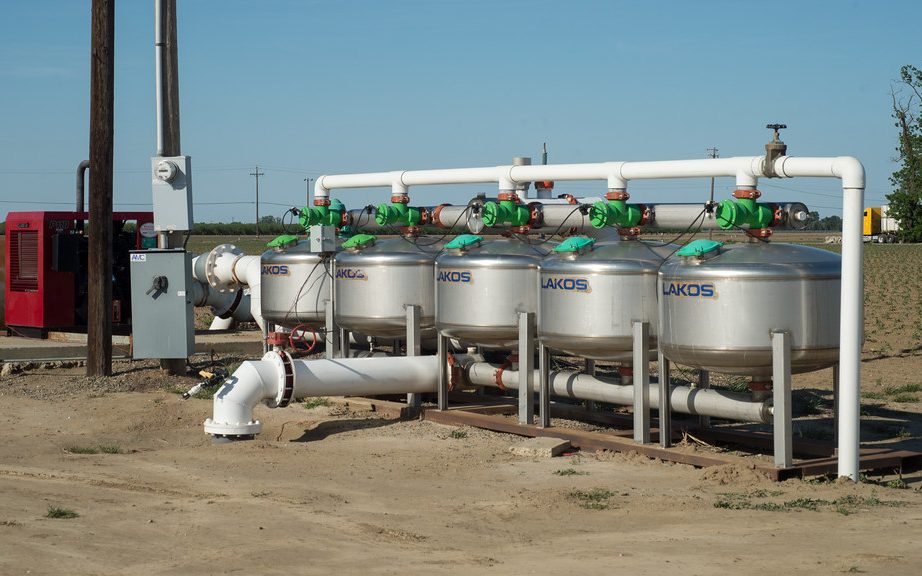
Where the rocks are coming from
Irrigation that shares a well will carry whatever the well gives up. Fine sand sneaks through nozzles. Pea gravel and small stones rattle in the manifold and chip seats in valves. A pump set too close to the bottom, a well that has silted in, or a worn pump that is stirring the hole will all do this.
We don’t drill or rebuild wells. If the hole itself is producing a steady stream of gravel, a separator is a bandage and a driller needs to see the well. If the problem is sand that shows up in the sprinklers, a separator is the right piece of pump equipment.
What a sand separator actually does
A centrifugal sand separator is a canister on the discharge, ahead of the irrigation valves. Water spins inside. Sand and grit are heavier than water, so they drop into a chamber at the bottom. Cleaner water goes on to the system. You open a small purge valve to dump the chamber. It is not a filter cartridge you throw away every month, though a screen after the separator is still a good idea.
It belongs before the zone valves and before any drip filter, not after. Putting it downstream means the heads have already eaten the sand. It also needs enough flow to spin. A separator on a barely running pump will not separate much.
What it will not catch
A separator is for sand and grit, not for fist-sized rock, sticks, or a collapsed screen. Large stones usually settle in the first low spot or crack a valve and then sit there. If you’re picking rocks out of heads by hand, tell us the size. Sand is a separator job. Gravel may mean the pump is too low or the well is giving up its formation.
Iron slime is a different clog. A separator will not turn red water clear. It will keep the heavy grit from grinding the pump seals and the sprinkler nozzles.
How we fit one
On a visit we look at the pump, the pressure, and what is actually in the filter bowl. If a separator belongs on that system, we set it on the discharge with a purge and isolation valves so you can dump it without shutting the whole yard down for an hour.
The landscaping — heads, drip line, and the timer — stays with your landscaper. We take care of the pump side that feeds it.
Short answers
Can I just add a finer screen?
A finer screen clogs faster if the well is still sending sand. A separator takes the load off the screen. The screen is the backup, not the whole plan.
How often do I purge it?
At first, purge after each irrigation cycle until you see how much sand you get. A well that is settling down may only need a purge once a week. A well that fills the chamber every run needs a driller’s opinion, not a bigger separator.
Will this stop rocks from a pond or a ditch pump?
A screen or a foot valve is the first defense on a surface intake. A separator helps with the sand that gets past it. Weeds and leaves are a strainer problem.